THX 1138 movie review

Writer | Editor | Podcaster

There are still plenty of people who haven’t managed to sit through all 17 episodes of 1960s British cult TV series The Prisoner. I can understand their frustration as the show doesn’t follow the ‘normal’ hero-beats-the-baddy formula with everything neatly tied up with a bow at the end of each episode.
Neither the episodes, nor the series, follow a straight line. It’s illogical, confusing, intriguing, unique, challenging, experimental, weird even. Which is why it is still such compelling viewing decades after it was made. During its first broadcast in 1967, and subsequent repeats, it drove some viewers to distraction.
Okay, so what is The Prisoner all about?
On the surface; a man resigns from a top government job during a table-thumping tiff with a stiff Civil Servant, then drives home in a spiffing Lotus Seven S II, goes indoors (1 Buckingham Place, London) to pack for a holiday. He is put to sleep with gas pumped into his home and wakes up in The Village, apparently located on a remote island somewhere in Europe.
Waking up in a home with an interior identical to his London pad, our hero, Number 6 (Patrick McGoohan), is pressured by Number 2 (played by various actors during the series) to reveal why he resigned. But despite the psychological games and mind-altering drugs, Number 6 refuses to tell (he just wanted a break and a holiday).
Bottom line, he can’t decide if he is being held prisoner by his own people or a foreign power. If he reveals anything about his secret work then he’d never be allowed to leave (deemed untrustworthy to keep his mouth shut). One person will have to be broken, Number 6 or Number 2.
The Village is like a retirement home for people who know too much, they live a life of anonymity (numbers only please) and total control.
(The Prisoner may have been based on a place operated by the UK government’s Inter Services Research Bureau in Scotland).
Apart from the goodie-baddie push-pull story line, the show goes deeper as Number 6 kicks back against the system and the establishment. When he shouted “I am not a number, I am a free man!” it was McGoohan’s warning about the incoming world where everyone from birth really is filed, stamped, indexed, briefed (educated), and numbered.
In the show we see a total surveillance society with cameras dotted across The Village and in the homes people live in. The only entertainment is piped music and the Tally Ho ‘newspaper’ owned by those running The Village (no dissenting voices in this publication).
Neither Number 6, nor his village cohorts, are free to live their lives as they wish. They have the appearance of being free – as they can walk around The Village, go to restaurants, play games, some take a job to earn credits in this cashless society, and villagers even vote in an election that changes nothing but the name of the person in the high tower.
But they are not free to leave the village or enjoy any privacy.

But what I wanted to know, what we all wanted to know, is who is Number 1?
Each week we sat through an episode hoping for a clue. There were no clues. Some episodes were simply mind-boggling; probably due to the fact McGoohan had originally pitched a series of seven episodes to TV producer Lew Grade. Grade asked for 26 and got 17. So the plot was stretched way beyond McGoohan’s original vision (he didn’t even appear in one episode at all).
Ultimately Number 1 is revealed. He is wearing a white hooded cloak, has a crystal ball, and as he lifts his head we see a black and white mask that’s removed by Number 6 to reveal a monkey mask. Then, with the monkey mask pulled away, the mysterious monk-like figure is revealed to be Number 6. Confusingly, Number 6 is seen to pull the mask off Number 6 (not a typo). He is his own prison guard.
Our hero escapes back to London only for the front door of his home to open automatically – just like it did in The Village. He’s no more free here than he was in The Village (a prisoner of the system).
The ending caused the British viewing public to go bananas – jamming phone lines at the TV station. McGoohan – who created the show – said in later interviews that he had to go into hiding for a while; in Wales, well away from telephones; something that could be done in 1967 (imagine what would happen today with trial by social media).
Explaining the show McGoohan said Number 6 is Number 1, and Number 1 is you – the viewer.
So what’s the main take-away from this science fiction, drama, psychological thriller that is The Prisoner?
To paraphrase McGoohan, I guess it’s that you (dear reader) are number 1, you decide what to do, you don’t need permission, you are free to engage as much or as little as you like in society. Your life is your own; even if you have been filed, stamped, indexed, briefed, and numbered.

‘The Village’ is a tiny resort called Portmeirion in Gwynedd, North Wales in the UK. When the show was first broadcast few people had any idea Portmeirion existed (although it was revealed in the end credits of the final episode).
During the 1980s I visited Portmeirion and it looked much the same as it did 20 years earlier in the TV show (quite a surreal experience). It still hadn’t changed much on a second visit in the early 90s.
A look at Portmeirion’s website reveals the location is still thriving and no doubt all visitors are given a number upon entry.
A Prisoner convention, organised by the TV show’s official appreciation society Six of One, is held there every year (not to be confused with an annual pop concert that has nothing to do with the TV show at all).
Debs McDougall, a member of Six of One, kindly sent me details of a plaque commemorating the TV series that sits above the door of the Prisoner Shop (which was Number 6’s home in the TV series (the exterior). The plaque was officially unveiled by Fenella Fielding (the voice of The Village) on 13 May 2005.
There is a second plaque dedicated to Patrick McGoohan on the wall of the White Horse cottage (where the actor and his family stayed while filming on location). And there is a bust of Patrick near the entrance of the village which was unveiled by Patrick’s daughter Catherine on 29 September 2017 – the year of the show’s 50th anniversary.
Also in 2017 a permanent chess board was installed on the village lawn. Members of Six of One were the first people to play a game on it. Hopefully it ended with a Checkmate.
So it is great to know the owner of The Village – a charitable trust – hasn’t forgotten how this slice of Wales (a great destination for a family holiday) was put on the world map.

Patrick McGoohan was offered a small role in the reinterpretation of The Prisoner – the old man seen escaping at the start of the first episode. However, he declined the offer while asking to play Number 2 (which would have been fantastic).
It’s a shame the American producers didn’t accommodate the creator and driving force of the series… Shooting took place in 2007, it was first broadcast in 2009, and reviews were less than favourable (so maybe Patrick McGoohan was best out of it…).
Some of the sound effects used in The Prisoner (1967) were first heard in the movie The Ipcress File (1965).
Patrick McGoohan: 19 March 1928 to 13 January 2009.
For more about The Prisoner see the show’s official appreciation society website Six of One
Read about The Truman Show and its link to The Prisoner.
Be seeing you…
Patrick talks about The Prisoner.
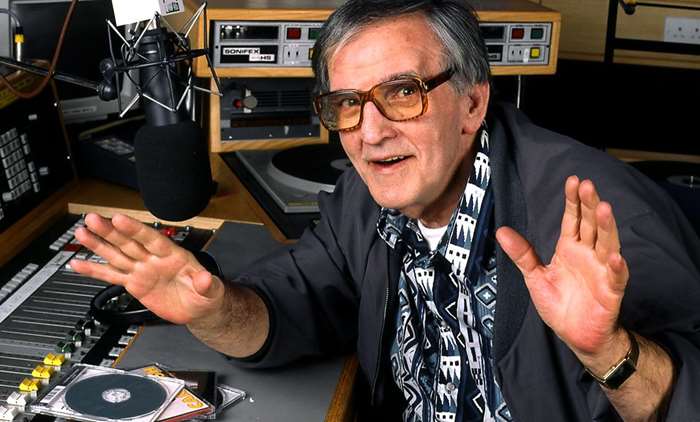
If you listened to Alan Freeman’s Pick of the Pops on Britain’s Radio One you would have heard the Australian DJ present a tightly formatted radio show featuring the week’s top 30.
It was compelling listening for anyone wanting to know the week’s number one, and Freeman certainly put a lot of energy into his shows. Way back when, it almost mattered what the week’s top selling single was.
Freeman hosted the countdown show from 1967 until 1972, he remained on air until 2000, and his signature song, At The Sign Of The Swinging Cymbal, became synonymous with him and his shows – so much so that there are generations of people who, when hearing it, think of Freeman.
As a wannabe DJ in the 70s I marvelled at his presentation style and perfect diction. His use of classical music and rock song segments to punctuate his shows was masterful too.
Freeman was born in New South Wales, Australia, on 6 July 1927 and as a youngster dreamed of being a singer. His first job as a pay clerk was at a timber firm. In 1952 he auditioned to be a radio announcer for 7LA Tasmania, and the die was cast.
By 1957 he was at 3KZ in Melbourne, but the travel bug had bitten, and so he headed to the UK – initially for nine months. His boss at 3KZ agreed to keep a job open for him, but Freeman was never to return.
Unimpressed with the output of the BBC in the UK, about the only game in town at the time, he went to Radio Luxembourg. By 1960 he landed a gig at the BBC and his career started to take off.
He subsequently went from hosting a light programme show to being a presenter at Radio One – a station launched by the BBC in 1967 solely to compete with popular off-shore pirate stations such as Radio London and Caroline – which had just been outlawed.
In 1979 he left the BBC to work at London’s top commercial station Capital Radio, but returned to the Beeb in 1989 for a rehash of his Pick of the Pops show, this time called Pick of the Pops – Take Two.
In 1993 Radio One had a massive clear-out of popular and established DJs and Freeman was swept out with other big names. He continued broadcasting though, collected up an MBE along the way and eventually returned to the BBC, this time on Radio Two where he worked until he retired in 2000 aged 73 (that’s not a typo, he was DJing at Seventy Three!).
While there were questions about Freeman’s personal life, the presenter spent his professional career at the top of his game as a shining example of what a good radio host can and should do.
He added sparkle and energy to his shows, surprised listeners – with rock and classical drop ins, ad-libs, and laughed off his own on-air fluff ups (fluff Freeman) – each show had a beginning, middle and an end.
His on-air catchphrase ‘Alright?’ was aimed at the engineer on the other side of the glass.
Alan Freeman MBE: Born 6 July 1927. Died 27 November 2006.
I read FilmFreak’s review of the 90’s movie The Truman Show this week, and it got me thinking back – way back.
When word seeped out in 1997 that a movie was being made about a man trapped in a village many of us movie nuts assumed, wrongly as it turned out, that a big screen version of the cult 1960s TV show The Prisoner was coming down the line.
The Prisoner, played by Patrick McGoohan, tells the story of a British spy who resigns from the Secret Service. He drives home, is put to sleep by gas, and wakes up in The Village – an island choc-block full of disgruntled civil servants and spies who were taken out of society [by whom we never find out] for fear they might sell their secrets.
Our hero was called Number Six – no names in The Village – and when he wasn’t looking to escape he spent his time trying to find Number One. We discovered in the final (17th) episode that he didn’t need to look too far.
However, back in 1998 when The Truman Show was released we got a family movie that touched all the bases; it was equal part comedy, tragedy, adventure, and romance, plus a nod to the surveillance society we now inhabit. There was no apparent connection with The Prisoner TV series (shame really).
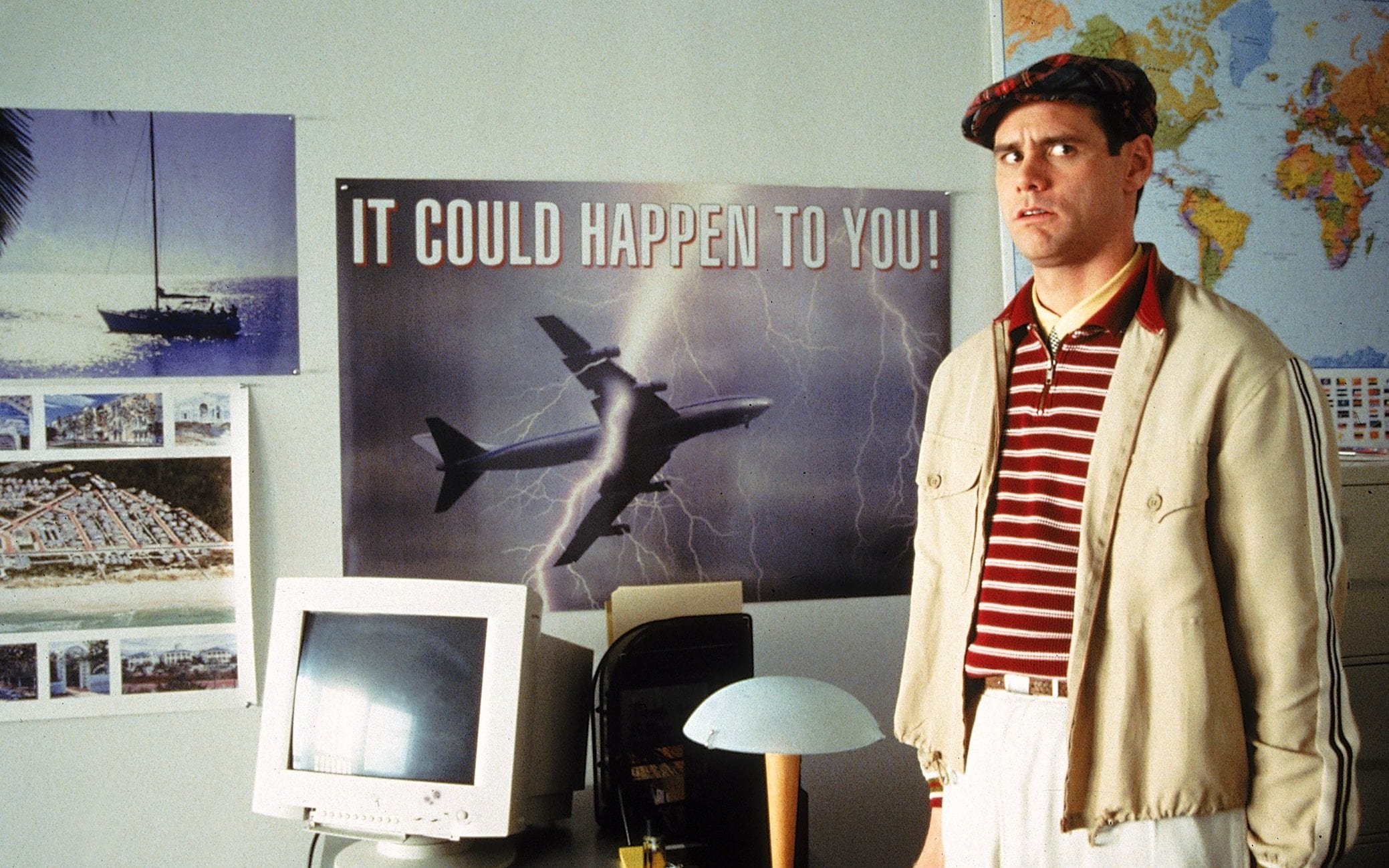
If you haven’t seen the movie, it features the story of Truman (Jim Carrey), a new-born baby adopted by a TV company. He is brought up on a huge TV set the size of a town that is covered in a dome that mimicks the sky.
Unbeknown to Truman, everyone he knows in the town; his wife, relations, friends and work mates, are paid actors and his life is broadcast 24/7 to the world via hundreds of hidden cameras and microphones.
By the time we, the movie-goer, catch up with Truman he is a struggling insurance salesman, lacking self-confidence, and secretly searching for his first love – an actress who tried to tell him all was not as it seemed. Truman can’t forget her.
We watch as Truman’s discontentment slowly manifests. He becomes increasingly unhappy with domestic bliss, suspicious of his circumstances, questions his situation, seeks adventure, travel, and the girl.
Making everything work is producer Christoff (Christ?) who watches everything from the control room in the ‘Moon’.
I remember people came out of the woodwork saying the show was Hollywood’s way of tipping humanity off that we were living under a huge dome on a flat earth.
Ultimately, Truman makes his way to the edge of the dome by way of a sail boat, and heads for the door. Will he be any happier living in the outside world? We don’t get to find out.
However, I still think there is an opportunity to put The Prisoner on the big screen – so long as it is done in keeping with the original TV series; sophisticated, thoughtful, provoking, gritty, intelligent, and challenging.
Unfortunately, I don’t think Hollywood is capable of such a thing.

Darcy Gladwin tells Steve Hart all about his movie Godplex and what it takes to get a movie made against all the odds
Godplex, which had the working title Godspell, is a feature film written and directed by New Zealander Darcy Gladwin. Not to be confused with the sixties stage show, Darcy’s movie features Shane Hollands, a prominent Auckland performance poet.
Shane plays Clark Duke, a frustrated insurance agent searching for self-respect and a new way of life.
“In the movie Clark creates an internet religion called Virtology,” says Darcy. “A combination of work pressure, psychological unrest and fate cause him to take the bold step of leaving his small city roots and stepping out on to the road to spread his word.
“The absurdity of the premise lends itself to comedy and we are aiming to include a healthy blend of humour, emotional drama and issue-raising storytelling.
“The story of Clark is a common one – people who stay in the same place or situation too long and the resulting frustration of becoming stale and feeling insignificant.
“Godplex, which is our working title, raises questions about religion, freedom and when does free speech become dangerous and require censorship.”
So far Darcy has invested about $8000 of his own money in the movie which has been in production since 2008. The first half of Godplex has been completed and has been screened to positive reviews in New Zealand and Australia – where Darcy is currently based.
First published June 2010 in Viewfinder magazine
“I’m working six days a week on minimum wage to save the money to fund the film,” he says. “I live in a caravan with no power and when it rains there’s a waterfall. That’s me and Godplex 2010, this is the reality of my dream. To communicate, share stories, experiences and the stuff that makes us human.
“I am lucky to have supportive crew who are working on a deferred basis and we now have our own gear. I have no private or state funding and I continually look for avenues [of finance].
“The business of filmmaking scares me as I have no experience. I believe I will find the right way for my projects to get to audiences but I don’t want to have to learn the hard way. So it’s a matter of push/pull until the right combination locks into place.”
Darcy first picked up a video camera when he was at school as part of a class assignment.
“We had an old Hitachi vidcam with an outboard tape recorder,” he says. “Me and my writing buddy only just made the deadline when the works were screened to the entire year. Our film was loved by the students and equally frowned on by the teachers for its causal profanity and attempt at special effects. Poetry this was not.
“Aside from family snaps, this was the first time I had worked with a camera and it really opened my mind to the possibilities of expression.”
The former University of Auckland student has worked as a VJ (a DJ who plays music videos) and his performances have graced some of the largest festivals in New Zealand and Australia.
Currently based in Melbourne he has made “quite a few experimental films” which have been shown in France, Australia and New Zealand.
“I am also interested in documentary filmmaking where I’ve been editor and cinematographer,” he says. “I think a strong psychological aspect is important when it comes to movies.”
His first serious movie was The Electric Ocean – a visual montage of a man’s journey to death set to music.
“It could have been pure tack but ended up with two awards and a nomination at the annual Auckland University student film competition.
“This celebration of my movie totally baffled me and I wondered why other films which appeared more ‘artistic’ did not do as well.
“I think the process taught me to be resourceful with what I had around me and not create something that was outside of do-ability. For example, the two characters in the movie were work friends and the woman at the end was the girlfriend of one of the actors. There wasn’t going to be problems with chemistry on this shoot!”
Editing on a computer even then was revolutionary, says Darcy.
“I put a Miro video card in the computer for editing, this was almost a revelatory experience in the mid nineties, to have full spec PAL running on my PC. I learned to craft my ideas on the resources I had, not fantasise about ideas which would be very hard to produce. Work with the medium.”
Darcy says he was in heaven when he discovered he could digitise VHS footage, but prior to that he edited with two Sony VHS decks.
“The Sony VX1000 camera arrived with MiniDV, I rinsed and mangled the DV format for 10 years and finally moved to shooting on 16mm film just to know the difference intimately.
“The dSLR convergence is the truth and the light. I think like a photographer, studying light. I shoot cinematically, movement across frame. Getting moving pictures off a Hi Def stills chip is the crossover we’ve been waiting for and now it’s here there’s no going back.
“I set my sights on a 5DmkII but when the 550 dropped [in price] it was the perfect combination camera for me. We’re just at the start now so there’s going to be a lot of improvement in the coming years, also it is exciting to see more players in the field and new formats emerging.”
Darcy says the most compelling reason he has for making movies is the scope of expression.
“It’s really exciting to be thinking about all aspects of the process and at the beginning it’s >> a rapid flow of ideas all jumbled up in your mind,” he says.
“They need sifting, aggregating, refining and assembled into their places. I’m a rabid multi-tasker and love switching modes of thought to accommodate new ideas. Mostly I dislike the managerial aspect of filmmaking – it’s a logistics game and you need a very organised brain to run a shoot successfully.”
Darcy is clear when it comes to pinpointing the pitfalls of making movies.
“Bad acting is an easy one to fall into and that’s the responsibility of the director,” he says. “Film is a visual medium, find actors who symbolically portray the characters and don’t let them say anything. I don’t make soap opera.
“Allow more time than what you think you need because time is gnawed away in so many ways. You need to control the flow of time including eating times etc. You need to create an energy at shoot time which should be in harmony with what you’re producing.
“Put your main talent first. That probably means main actor and camera person. Plot the logistics around these people and everything else will fall into place.
“It’s a tough line between self-managing and delegating. Either way you’re going to have big frustration, it’s the nature of the game. Build a core crew that you know will perform consistently and expand from there.”
His advice to new movie makers is to follow your instincts, find your literary form – if there is one – and realise what stories interest you.
“Filmmaking has become open-source now, all the information you need is out there,” he says. “Plan and prepare meticulously. Make a fun and creative culture. Shoot with passion.
“Try not to get carried away with technical perfection. A standard definition film with heart and soul is going to blow away any full HD production.
“Don’t spend megabucks on that new computer. That five-year-old laptop will do the job. People always complain the computer is too slow, manage your material, make a workflow that works for your system. Backup, backup again.”